Running costs
What a flat white at home actually costs, line by line
Machine, beans, milk, power and filters, divided per cup. At two a day over five years an example $1,000 machine adds 27 cents; the whole cup lands near $1.45.
A machine's price answers the wrong question. What a home coffee costs depends on how long you keep the machine, how many cups you pull from it, and the four running costs that never appear on the shelf label.
This guide works all five lines in order, with the division shown, so you can substitute your own figures. Every dollar amount is an example chosen to demonstrate the method rather than a price we are quoting; Australian consumer prices are advertised GST inclusive, so the figures here already include GST.
The machine is the small line, if you keep it
Two coffees a day for 5 years is 3,650 cups. An example $1,000 machine divided by 3,650 is about $0.27 a cup. The same machine replaced after 2 years covers 1,460 cups and costs $0.68 a cup — two and a half times as much for identical equipment.
Kept 8 years, which a machine with available gaskets, baskets and burrs can reach, the figure falls to $0.17. The spread between $0.17 and $0.68 is entirely about parts supply and descaling discipline, not about the original purchase.
There is a useful coincidence in the table below: a $400 machine kept 2 years costs exactly the same per cup as a $1,000 machine kept 5 years. Both are $0.27. Longevity and price are interchangeable in this sum, which is why the serviceability question is a cost question.
| Machine price | Kept 2 years | Kept 5 years | Kept 8 years |
|---|---|---|---|
| $400 | $0.27 | $0.11 | $0.07 |
| $1,000 | $0.68 | $0.27 | $0.17 |
| $2,500 | $1.71 | $0.68 | $0.43 |
Each cell is the machine price divided by 730 cups a year multiplied by the number of years, with no resale subtracted. The cost-per-serving calculator on this site takes a resale figure as well.
Beans are where the money actually goes
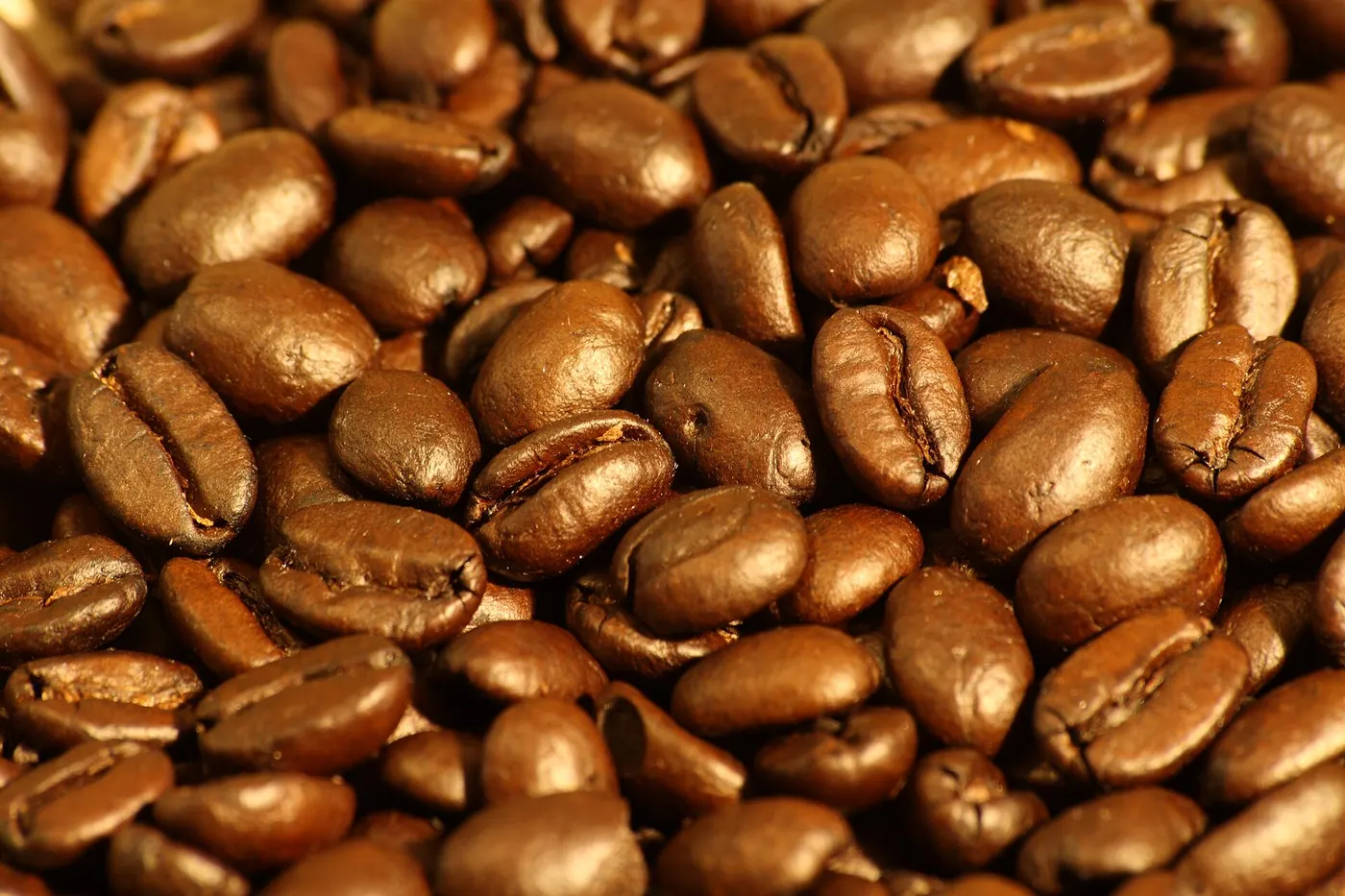
A double shot uses roughly 18 g of coffee. A 1 kilogram bag therefore yields about 55 doubles. At an example bag price of $45 that is about $0.81 a double, three times the machine's share in the 5 year column above.
The bag size changes that more than any equipment decision. A 250 g specialty bag at an example $24 yields about 14 doubles, which is $1.72 a double — more than double the kilogram price. Freshness is the trade: a kilogram opened on day one is not the same coffee on day forty.
Waste belongs in the bean line. Two discarded shots while dialling in a new bag is 36 g, which is about 4% of a kilogram bag and about 14% of a 250 g bag. Grinding onto a scale rather than by eye is the cheapest change in this entire guide.
- 18 g dose from a 1 kg bag gives about 55 doubles, so $45 a kilogram is about $0.81 a double
- A 250 g bag at $24 gives about 14 doubles, which is about $1.72 a double
- Milk: 150 ml from a 2 litre bottle at an example $3.10 is about $0.23 a flat white
- Two dial-in shots per bag adds about 4% to a kilogram bag and about 14% to a 250 g bag
- At two coffees a day the household uses roughly 13 kg of coffee a year
Power is tiny, and filters are not
Breville's published instruction book quotes 1850 W for the Barista Express. A machine at that rating that is genuinely heating for 4 minutes a day uses about 0.12 kWh a day, or roughly 45 kWh a year. At an assumed 35 cents a kWh that is about $15.75 a year, which across 730 cups is about $0.02 a cup.
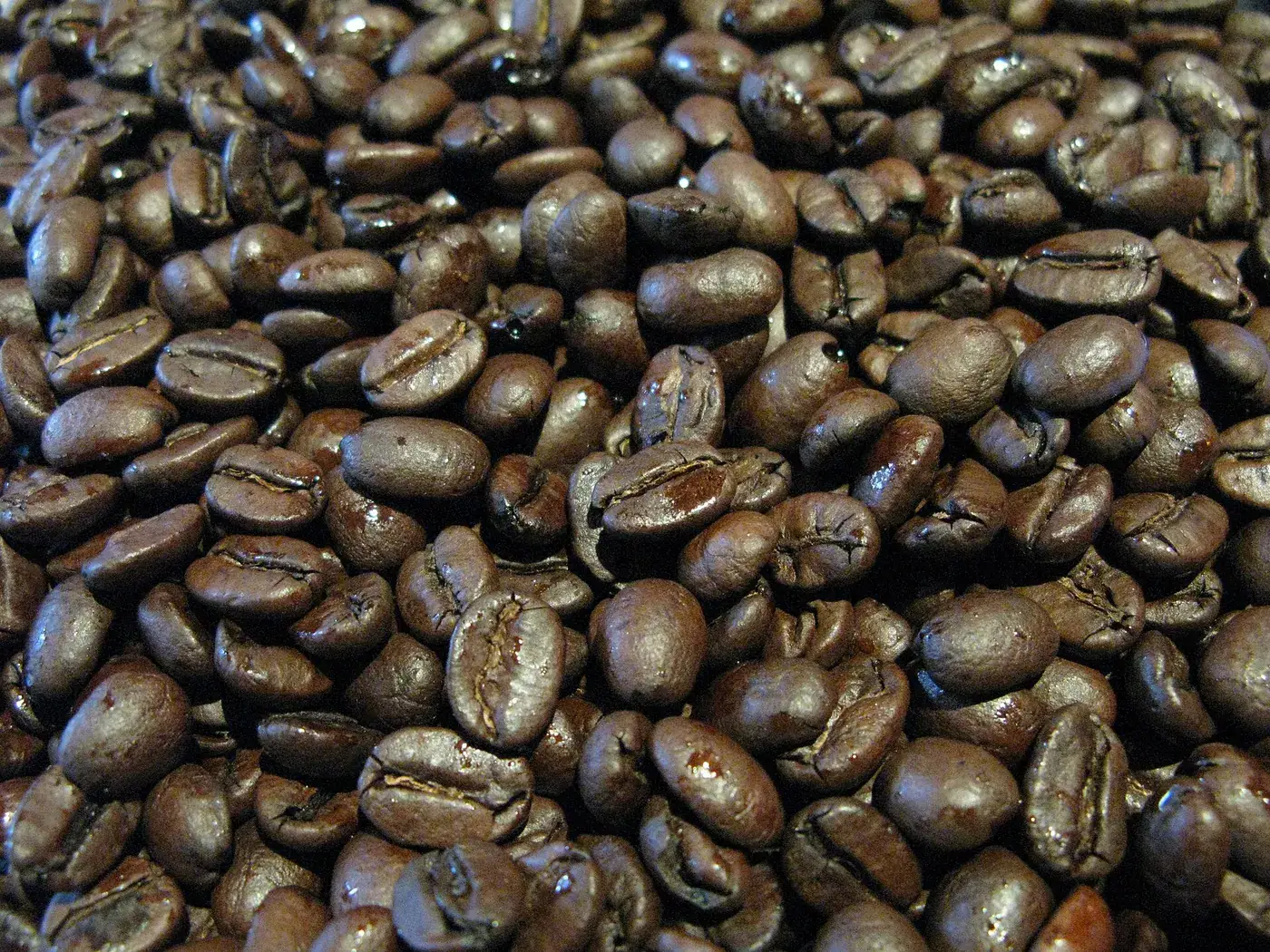
The filters are twenty times that. The same instruction book says to set the filter's date dial 2 months ahead and that replacing the water filter every two months will reduce the need to descale the machine. Six cartridges a year at an example $12 each is $72 a year, which across 730 cups is about $0.10 a cup.
Descaling powder adds a little more. At an example $15 for a pack of four sachets used four times a year, that is $15 a year and about $0.02 a cup. Consumables together are therefore about $87 a year and $0.12 a cup — six times the electricity, and the line most buyers leave out entirely.
| Line | Basis | Cost a year | Cost a cup |
|---|---|---|---|
| Electricity | 1850 W heating 4 minutes a day, about 45 kWh | $15.75 | $0.02 |
| Water filters | 6 cartridges a year at $12 | $72 | $0.10 |
| Descaler | 4 treatments a year from a $15 pack of four | $15 | $0.02 |
| Consumables total | Filters plus descaler | $87 | $0.12 |
The 1850 W rating and the two-month filter interval are from Breville's published instruction book. The tariff, the cartridge price and the descaler price are assumptions used to show the method.
Adding the five lines together
On the example figures used throughout this guide — a $1,000 machine kept 5 years, two coffees a day, a $45 kilogram bag at 18 g a double, 150 ml of milk from a $3.10 two litre bottle, 1850 W heating 4 minutes a day and filters and descaler as above — a home flat white comes to about $1.45.
The split is $0.27 of machine, $0.81 of coffee, $0.23 of milk, $0.02 of electricity and $0.12 of consumables. Change one input at a time and the ranking almost never moves: beans first, milk and machine next, consumables after that, electricity last.
The practical consequence is that a cheaper machine rarely rescues an expensive bean habit. Moving from a $2,500 machine to a $1,000 one saves $0.41 a cup in the 5 year column. Moving from a 250 g bag at $24 to a kilogram at $45 saves $0.91. The bag is the lever.
| Line | Per cup | Share of the cup |
|---|---|---|
| Machine, $1,000 over 3,650 cups | $0.27 | 19% |
| Coffee, 18 g from a $45 kilogram | $0.81 | 56% |
| Milk, 150 ml from a $3.10 two litre bottle | $0.23 | 16% |
| Electricity | $0.02 | 1% |
| Filters and descaler | $0.12 | 8% |
| Total | $1.45 | 100% |
Shares are each line divided by $1.45 and rounded, so they sum to 100%. Every dollar figure in this table is an example; put your own into the cost-per-serving calculator.
Why the tariff assumption needs refreshing
The 35 cents a kWh used above is an assumption, and electricity is the fastest-moving line in the whole sum. The Australian Bureau of Statistics monthly consumer price index indicator for September 2026 put electricity up 12.8% over the preceding 12 months, against an all-groups CPI rise of 4.3%.
At $0.02 a cup, electricity could double and move the total by 2 cents, so the tariff assumption barely matters here. It matters a great deal for the kettle, the oven and the heater, which is a reason to read your own bill rather than reuse a figure from a guide.
If you are considering importing a machine, two further numbers apply. business.gov.au states that most imports attract 10% goods and services tax and that goods valued up to A$1,000 can generally be imported without a formal import declaration. On a $900 machine the GST alone is $90, before freight.
Before you buy
- Count the coffees your household really makes in a day, then multiply by 365
- Divide the machine price by that annual figure times the years you expect to keep it
- Weigh one dose and divide the bag price by the number of doses it yields
- Read the rated watts from the machine's own plate rather than the product page
- Take the electricity tariff from your own bill, not from this guide
- Price a year of water filters at the interval the manufacturer's manual specifies
- Add 10% GST and freight before comparing an overseas machine price with a local one
Questions readers ask
- How does this compare with a cafe coffee?
- On these example figures a home flat white is about $1.45. The useful comparison is the daily total rather than the single cup: at two a day, home is about $1,059 a year on this arithmetic. Whether that beats a cafe depends entirely on your local price, which this site does not publish because it carries no price feed.
- Should the grinder be included in the cost per cup?
- Yes, the same way as the machine. An example $500 grinder over 5 years at two coffees a day adds $0.14 a cup, taking the total from $1.45 to $1.59. It belongs in the equipment column, not the bean column, and it follows the same longevity arithmetic: kept 8 years it is $0.09.
- Does leaving the machine on all day change the figures much?
- In dollars, modestly. A machine idling at an average 30 W for 12 hours a day uses about 131 kWh a year, which at an assumed 35 cents a kWh is about $46 — three times the brewing figure and about $0.06 a cup. In machine life it matters more, because a boiler held hot forms scale faster.
- Is a kilogram bag always cheaper?
- Per double, yes on these examples: about $0.81 against $1.72. Per cup you actually enjoy, only if you finish it while it is good. At two coffees a day a kilogram lasts about 27 days, which is reasonable. At two coffees a week it lasts most of a year, and the saving disappears into stale coffee.
Sources
- Breville — the Barista Express instruction book, Australia and New Zealand edition (1850 W; set the water filter date dial 2 months ahead; replacing the filter every two months reduces the need to descale) — checked 2026-11-03
- Australian Bureau of Statistics — Monthly consumer price index indicator, September 2026 (all groups up 4.3% over 12 months; electricity up 12.8%) — checked 2026-11-03
- business.gov.au — Importing and your business (10% GST on most imports; goods up to A$1,000 generally need no formal import declaration) — checked 2026-11-03
Some links on this site can earn us a commission. That does not change which product a guide recommends, and it adds nothing to your price. Advertising is not enabled on this site yet. When it is, ads will be labelled and kept visually separate from the guides.