How to choose
Choosing an espresso machine for an Australian kitchen
Bench depth, boiler type, milk volume and parts supply decide this purchase. The four questions to settle before any model name, worked in AUD with GST included.
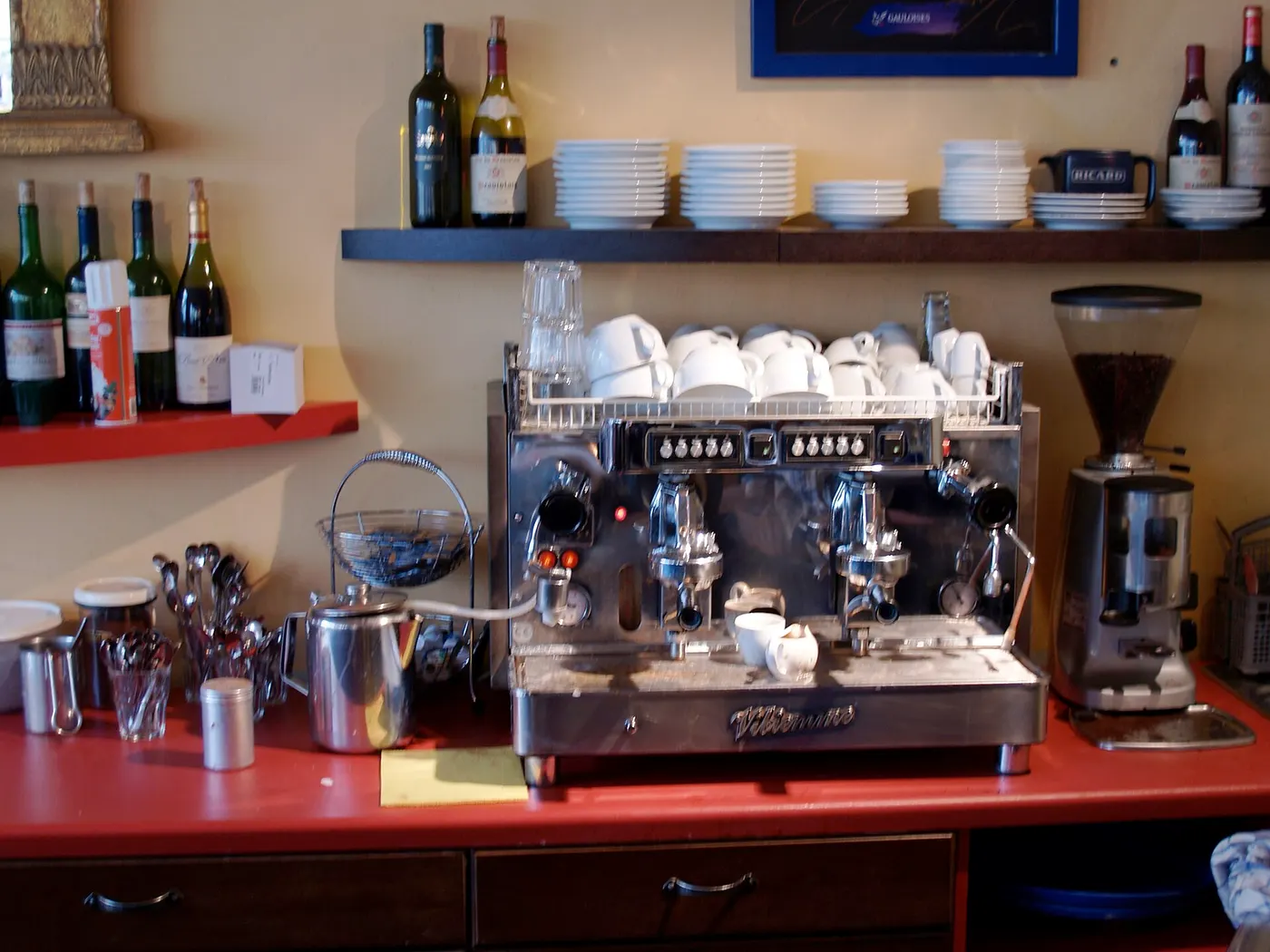
Four things decide whether an espresso machine is still being used in year five: whether it fits the bench with the cupboard above it, whether it can keep up with the milk drinks the household actually makes, whether the grinder in front of it is good enough, and whether parts are still sold for it.
None of those is a score out of ten. They are measurements and specification lines you can read before you buy. This site has tested nothing, publishes no rankings and carries no live prices; every dollar figure below is an example used to show arithmetic, and Australian consumer prices are advertised GST inclusive.
The bench, the cupboard and the tank lid
Measure three things: bench depth from the splashback to the front edge, the height from the bench to the underside of the overhead cupboard, and the clearance you need to lift the water tank lid. The third defeats more purchases than the first two, because top-filled tanks are the norm and the published machine height is measured with the lid closed.
Breville's own instruction book for the Barista Express describes a removable 2 litre water tank filled from the top with integrated filtration. A 2 litre tank is a useful size — it is roughly a week of two coffees a day before refilling — but it has to come out or open upwards, and under a standard overhead cupboard that is the measurement to take with a tape rather than from a product photograph.
Leave 50 to 80 mm behind the machine as well. Steam and heat need somewhere to go, the power cable needs a bend radius, and a machine pushed hard against a tiled splashback will mark it.
| Measurement | Where to take it | What it rules out |
|---|---|---|
| Bench depth | Splashback to front edge | Deep machines, and any machine plus a grinder side by side |
| Height to cupboard underside | Bench surface to the cupboard | Tall machines before the lid is even opened |
| Tank lid clearance | Machine height plus the lid's swing | Top-filled tanks under a low cupboard |
| Rear clearance | Splashback to the machine's back | A flush installation; allow 50 to 80 mm |
| Power point position | Distance and height from the machine | Extension leads across a wet bench |
The 2 litre top-filled tank figure is from Breville's published instruction book for one model, used here as an example of what a specification sheet contains. We have not tested the machine.
Milk volume is the specification question nobody asks
If most of what the household drinks is black, the boiler question barely matters. If it is four flat whites between 7 and 8 in the morning, it is the only question that matters. A single boiler heats for brewing and for steam in turn, so every milk drink includes a wait while the machine changes temperature.
For one or two milk drinks that wait is an annoyance of perhaps 30 to 60 seconds. For four in a row it is the reason a machine stops being used, and that is the most expensive outcome available: a $1,000 machine used for 18 months costs $0.68 a cup at two a day, against $0.27 if it reaches 5 years.
The power rating is a related clue. The Breville instruction book quotes 1850 W for the Barista Express and describes it as high power for fast heat-up and high pressure steam. Wattage is not a quality score, but a low-wattage machine with a single small boiler will take longer between the shot and the milk, and that delay is what the morning actually experiences.
- Count the milk drinks made in your busiest 30 minutes, not in a whole day
- One or two milk drinks: a single boiler is comfortable
- Three or more back to back: look for a heat exchanger or dual boiler, or accept the wait
- Check the steam wand has enough clearance for the jug size you already own
- A 2 litre tank is roughly a week of two coffees a day before it needs refilling
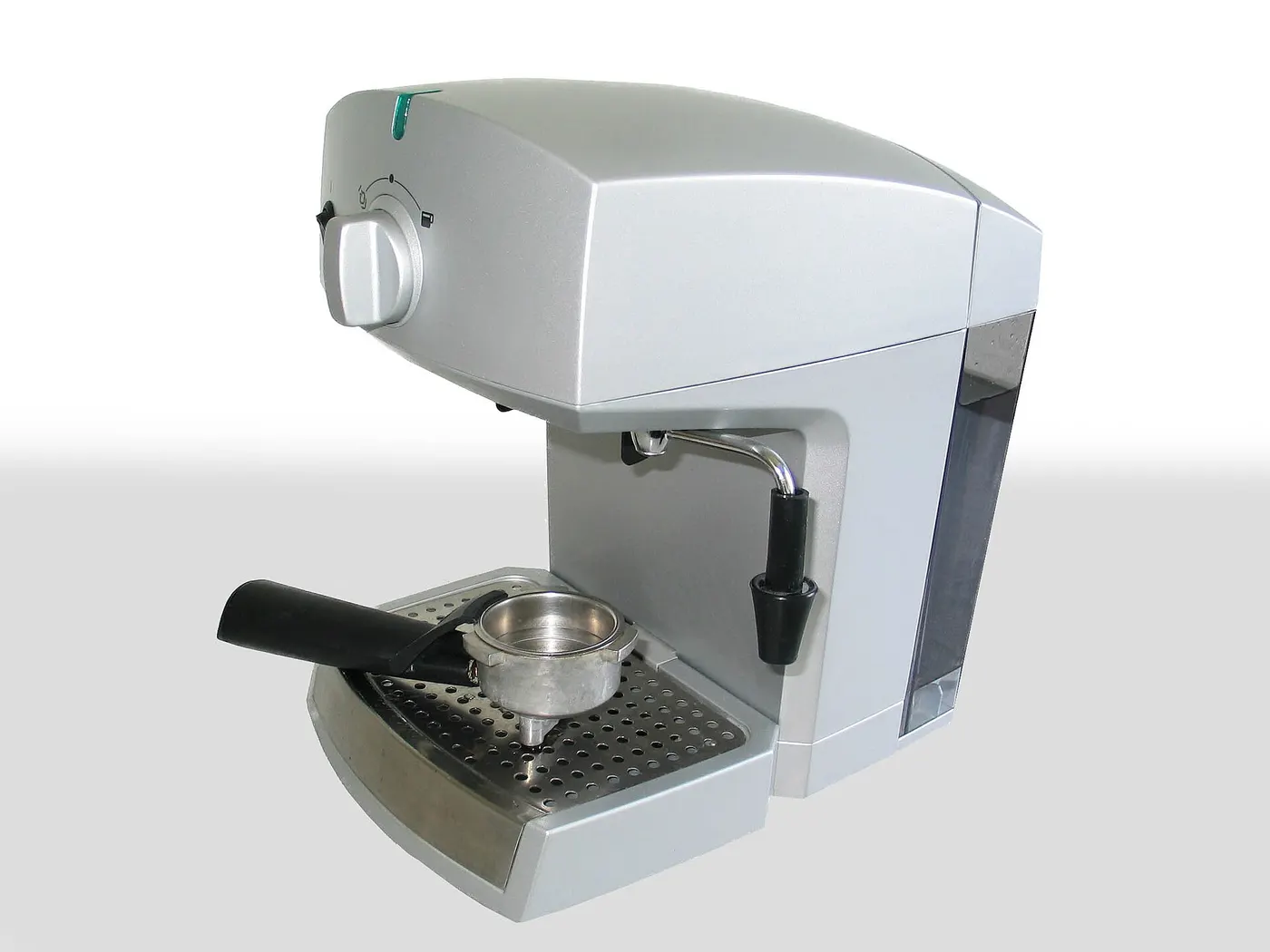
The grinder sets the ceiling, whatever the machine cost
An espresso machine applies pressure to whatever the grinder gives it. If the grind is uneven, water finds a path through the puck and no boiler, pump or pressure profile repairs the result. This is why a split that puts a third or more of the budget into the grinder survives longer than one that puts a tenth.
On an example $1,400 total, roughly $500 to the grinder and $900 to the machine is a split that keeps working. On an example $700 total it is about $250 and $450. These are planning ratios rather than product recommendations, and they assume you buy both at once rather than promising yourself a grinder upgrade later.
Machines with a built-in grinder collapse the decision into one purchase, which is convenient and which also means one failure takes out both functions. Breville's instruction book for the Barista Express describes an adjustable upper burr, automatic dosing for single or double baskets and a grind amount dial, so the grinder in that design is at least adjustable and serviceable rather than sealed.
| Total budget | Grinder | Machine | What the split buys |
|---|---|---|---|
| $700 | about $250 | about $450 | A consistent grind makes a simple pump machine usable |
| $1,400 | about $500 | about $900 | Room for a serviceable machine with real steam |
| $2,800 | about $900 | about $1,900 | Temperature stability starts to be the limit, not the grind |
These are allocations to plan with, not recommendations of particular products, and they are examples rather than prices we are quoting.
Serviceability, warranty and the guarantees underneath
Three questions settle whether a machine reaches year five: are gaskets and shower screens sold separately, is the grind or brew mechanism adjustable rather than sealed, and does the manufacturer publish a full instruction book rather than a quick-start leaflet. Breville publishes complete instruction books for its Australian and New Zealand models, including burr removal and cleaning procedures, which is the kind of document to look for before buying.
A manufacturer warranty is a fixed number of years. Underneath it sit the consumer guarantees in the Australian Consumer Law, which a seller cannot remove. The Australian Consumer Law site states that the rules protect buyers anywhere in Australia and apply uniformly across every state and territory; it functions as a navigation hub to the state and territory regulators rather than as a schedule of thresholds. For an appliance at this price, the guarantee that goods last a reasonable time is the one that does the work after the warranty expires.
Standards Australia develops the Australian Standards appliances are tested against and sells them through its Standards Store under 3, 6 and 12 month licences. That means a standard named by number can be looked up, and a claim with no number attached cannot.
The order to decide in
Measure the bench and the cupboard first, because that is the only constraint that cannot be negotiated. Count the milk drinks second. Split the budget grinder-first third. Check the parts and the instruction book last, as the test that kills a shortlist entry rather than creates one.
Done in that order the shortlist is usually two or three machines, and the remaining difference between them is taste and appearance rather than capability. Done in the reverse order, the shortlist is whatever was discounted that week.
- Measure bench depth, cupboard height and tank lid clearance with a tape
- Count the milk drinks in your busiest 30 minutes of the morning
- Allocate at least a third of the total to the grinder
- Open the manufacturer's instruction book and confirm it covers cleaning and descaling
- Find the parts page and confirm gaskets, baskets and filters are sold separately
- Keep the receipt and model number together from day one
Before you buy
- Measure bench depth, height to the cupboard underside, and the tank lid's swing
- Leave 50 to 80 mm of clearance behind the machine for heat and cable
- Count the milk drinks made in your busiest 30 minutes, not across the whole day
- Allocate at least a third of the total budget to the grinder
- Download the manufacturer's full instruction book before buying, not after
- Confirm gaskets, baskets, burrs and water filters are sold as separate parts
- File the receipt and model number together for any later guarantee claim
Questions readers ask
- Is a capsule machine a reasonable starting point?
- It is a good way to find out how many coffees a day your household really makes, which is the number every calculation on this site depends on. It is a poor way to find out whether you want an espresso setup, because the variables you would be learning to control — grind, dose and yield — are exactly the ones a capsule removes.
- Does a built-in grinder save money or create a single point of failure?
- Both. It is cheaper than two separate machines of the same quality and it occupies much less bench. The risk is that a grinder fault takes the espresso machine out of service at the same time. The mitigation is to confirm before buying that the burrs are removable and sold as parts, which a full instruction book will show.
- How much bench space does a machine and grinder need side by side?
- Add the two footprints, then add 100 mm between them so a portafilter can be handled, plus the 50 to 80 mm rear clearance each needs. Two separate units commonly need 700 to 800 mm of bench width in total, which is more than most kitchens have free next to a power point.
- Is a higher wattage machine better?
- It heats faster and generally steams harder, which matters only if you make several milk drinks in a row. Breville quotes 1850 W for the Barista Express and describes it as high power for fast heat-up and high pressure steam. For a household drinking two black coffees a day, wattage is close to irrelevant and the tank size and parts supply matter more.
Sources
- Breville — the Barista Express instruction book, Australia and New Zealand edition (1850 W; removable 2 litre top-filled water tank with integrated filtration; adjustable upper burr; automatic dosing for single and double baskets) — checked 2026-11-03
- Australian Consumer Law — consumer rights and protections overview (rules apply uniformly across every state and territory) — checked 2026-11-03
- Standards Australia — how Australian Standards are developed, purchased and licensed — checked 2026-11-03
Some links on this site can earn us a commission. That does not change which product a guide recommends, and it adds nothing to your price. Advertising is not enabled on this site yet. When it is, ads will be labelled and kept visually separate from the guides.